Across Miami-Dade, passionate community members are carefully considering nearly 900 applications to our Community Grants, The Foundation’s oldest and signature grant program. Amidst an increasingly challenging funding landscape, applicants await word of what share of a $7 million funding pool they might receive. Community Grants prioritizes increasing nonprofits’ sustainability and impact by providing mission-building general operating funds with reduced financial reporting requirements.
Our trust-based approach
“We trust our nonprofits to do exactly what they say they’re going to do, and we trust that they know what is best for our communities because they’re out in community,” said Vicky Checo, Director of Community Engagement, of our trust-based approach. “Our belief is that we should fund them and get out of their way and have them tell us what’s happening and what they were able to do with the funding.”
Through our trust-based model, our goal is to position Community Grants as a resource for the community. We aim to unlock the applications we receive at The Miami Foundation for as many potential donors as possible; if organizations take the time to put together these proposals, we want to share them with as many philanthropists as possible.
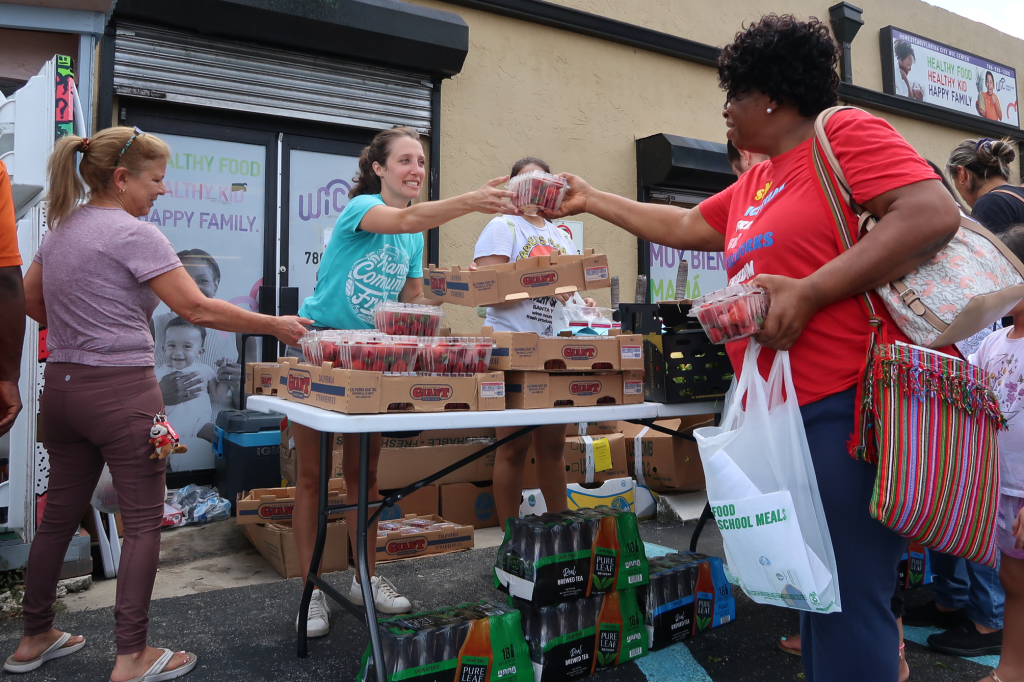
According to our survey of the roughly 1,300 local nonprofits who participated in Give Miami Day in 2024, trust-based philanthropy has the ability to address a widespread and urgent need: 44% of nonprofits said they were reliant on some government funding (that is often only paid through reimbursement), and 30% reported that no more than 10% of their budget could be used flexibly. Community Grants aims to fill that void and seeks to invest in an organization’s mission – full stop. The nonprofits we invest in know what their community most needs and we are going to invest in them to meet those needs.
“Very few funders award general operating funding,” added Checo. “We realize we’re leading the charge by prioritizing community in this way.”
Responding to community needs
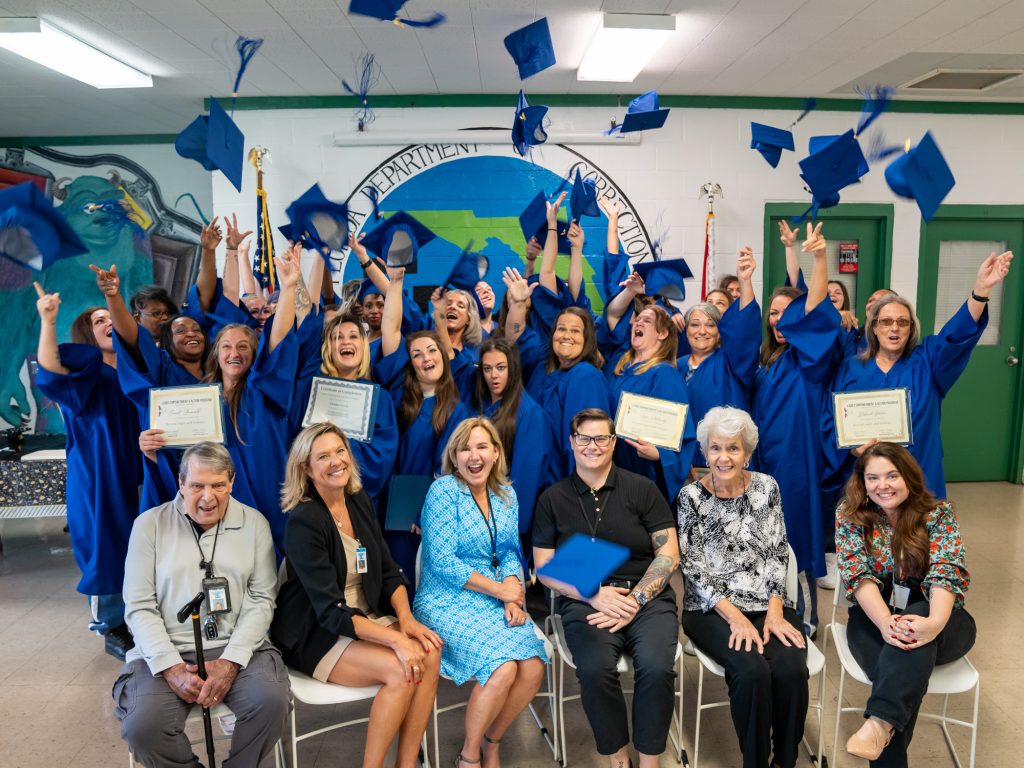
The increasingly responsive nature of Community Grants has its origins in the pandemic, when we actively worked to remove barriers to access so funding could be released as soon as possible. The evolution continued into the 2023 grant cycle, which saw us transform the program from a two-step process to a single application phase. Project budget requirements were dropped in favor of two-year awards based on organizations’ operating budgets. In all, the 2023 grant cycle produced 697 proposals that resulted in 95 awards totaling $5.4 million.
Community Grants are made possible thanks to generations of Miamians who have activated their generosity and passions through field of interest funds that are held as forever assets at The Miami Foundation, and our partners at the Frederick A. DeLuca Foundation and Miami-Dade County. Despite aspirations to turn Community Grants into a $10 million+ program, we acknowledge that even that won’t be enough to provide for every deserving applicant. That’s led us to create additional opportunities to support those organizations who don’t receive funding, namely through an ever-expanding capacity building program, which this year hosted three in-person nonprofit engagement sessions during the proposal phase for the 2025 cycle.
These sessions were an act of responsiveness in themselves: in a precarious moment, we wanted to affirm our support of nonprofits with our physical presence. In addition, we focused those sessions on mission-focused grant writing and vision statements. In The Foundation’s shift towards general operating support that invests in a nonprofit’s mission and vision, we wanted to ensure every applicant had the tools to submit strong proposals that represent their full impact.
A community-led process
We extend our trust-based approach to the community at large through our Community Advisors program, which invites passionate Miamians to review grant submissions. We first invited the broader community to participate as Advisors in 2023, with 35 volunteers bringing their community awareness and expertise to the review process. Their participation drove us to strengthen our systems and evaluation process, adding rigor to the program. For our current cycle, over 100 Community Advisors are joining us to review the 900+ proposals received in 2025. The growth of the program represents both an increasingly community-centered approach and a practical need: “we can’t say that we’re paying attention to detail if we’re doing it all ourselves,” acknowledged Checo. “The more voices we bring in, the stronger our award process will be.”
The volume of advisors also led to a first-ever in-person onboarding session at the University of Miami’s Lakeside Expo Center. “If we’re going to invite the community in, we’ve got to sit with the community and teach them about who we are and how we show up for our community,” said Julissa Rivera, Community Engagement Officer, of our decision to host convene advisors in person.
To further center community, this year’s evaluation criteria places additional value on community partnerships, elevating relationships to the same level as an organization’s assets. Other evolutions for 2025 include the incorporation of our long-standing Safe Communities Program, a partnership with the Miami-Dade State Attorney’s Office, and a moratorium in 2027 for organizations that receive grants in both the 2023 and 2025 cycles.
Finally, a community-centered approach helps curb the inevitable disappointment that comes from such a competitive grant process. “People love the list [of grantees] because they were all a part of it,” said Checo, “even the ones that don’t get funded.”